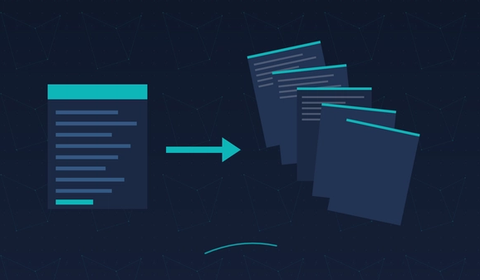
The Maturity Arc: From Bureau to Autonomous Control
Most MENA payroll buyers think they're choosing between bureau and managed payroll. They're choosing a starting point on a four-rung arc — here's what each one is, and where it ends.
Most buyers who come to us thinking about MENA payroll arrive with a binary in their head.
Option one: keep doing it in-house, with a patchwork of in-country providers, a long-suffering finance team, and a spreadsheet whose only fully-fluent reader left the company eighteen months ago. Option two: hand the whole thing to an outsourcer and stop thinking about it.
Neither option is wrong, but the binary is. The actual choice is not between two destinations. It is a starting point on an arc.
This piece walks through that arc — four rungs, two gating decisions, one endpoint — because the rung you can credibly buy today is rarely the same as the rung you want to be on in three years, and the gap between those two facts is where most payroll transformation projects either succeed quietly or fail loudly.
Why an arc, and not a switch
The reason payroll transformation is structured as an arc rather than a single switchover is that the moving parts are not all moving at the same speed.
The calculation engine — the part that takes a salary, an allowance schedule, a contract type, and the relevant statutory rules and produces a correct payslip — is a one-time integration. Once you trust it, you trust it. The customer's pace of adoption on the calculation layer is fast.
The data layer — where employee changes live, how they are captured, who owns the canonical version, what the audit trail looks like — moves at the speed of internal process change. That is months to years, not weeks.
The regulatory submission layer — interfacing with GOSI, the WPS file, Mudad, GPSSA, ILOE, the tax authority, the bank — moves at the speed of legal and entity-level decisions. Who is the authorised agent? Whose name is on the file? Whose accountability is being submitted? Those questions are governance-level, not operational.
A single-switch model collapses these three layers into one purchasing decision. It is the reason most payroll outsourcing projects underwhelm: the calculation engine works on day one, but the data layer is still messy and the submission layer is still gated on relationships and approvals that don't exist yet. The outsourcer is blamed for problems that are upstream of them.
An arc separates the three. You buy the calculation first. You mature the data layer at your own pace. You hand over the submission layer when both sides are ready. Each rung is a focused commitment, not a leap of faith.
The four rungs
Rung 1 — Bureau
The calculation engine, consumed as a service. This is the entry point and, for many businesses, the right place to stay for some time.
The customer maintains their own employee data system of record. Each cycle, they assemble a monthly diff — starters, leavers, salary changes, allowance changes, status changes, working pattern changes — and submit it to Global Kinect. The engine runs the calculation against the diff using country-specific statutory rules, and delivers a complete payroll pack: gross-to-net breakdown, employer cost summary, payslip generation, statutory contribution breakdowns, end-of-service benefit accruals, and end-of-period reports.
The customer takes that pack and submits to the regulators themselves. GOSI, WPS, Mudad, GPSSA, ILOE, tax authorities, banks — every regulatory and bank touchpoint is the customer's hand on the wheel.
Bureau is the right rung for a business whose internal process discipline is mature enough to assemble a clean diff, whose finance or HR team is already running the regulatory submissions competently, and whose payroll pain is calculation complexity rather than operational load. Multi-country statutory differences, EOSB accruals across jurisdictions, regulatory updates that need absorbing into the engine within days rather than quarters — these are where bureau earns its keep.
What Bureau is not: it is not a managed service. The customer owns the operational cycle. The engine does the maths; the customer does the work that surrounds the maths. A business looking to offload operational load entirely should not buy Bureau — they should wait for the rung at which load actually transfers.
Bureau is sellable today across all eleven MENA countries.
Rung 2 — Bureau + HRIS
The same calculation engine, but the data layer changes.
Instead of assembling a diff at month-end, the customer's HR and managers capture change requests continuously through HRIS as they happen. A starter is onboarded in the system on day one, not entered into a spreadsheet on day twenty-eight. A salary change is recorded the day it's approved, not collated at cycle cut-off. An allowance variation, a working pattern change, an address change, a contract amendment — each one enters the system at the point of decision.
By cut-off, the diff already exists. The calculation runs on captured-not-prepared data. The cycle is not a scramble to assemble what happened in the last thirty days; it is a verification of what the system already knows.
The other things that come with this rung matter: visa tracking, contract management, document management, employee self-service for payslips and leave and personal data, manager workflows for approvals. These are the operational surfaces that make HRIS-equipped payroll feel different from spreadsheet-fed payroll, day to day.
But the load-bearing change is the data discipline. Bureau + HRIS is the rung at which the customer's monthly diff stops being an operational event in itself.
The decision to move from Bureau to Bureau + HRIS is the decision to commit to running change requests through the platform rather than maintaining a parallel system of record. That is a real commitment. HRIS adoption is itself a transition that takes time on the customer's side; it is not instant on day one. Businesses that try to run HRIS as a passive system, with the "real" data still living in a spreadsheet somewhere, do not get the benefit. The whole point is that the platform becomes the system of record.
Rung 3 — Managed
The first rung at which the customer's operational load on payroll genuinely transfers.
Everything in Bureau, plus Global Kinect performs the statutory submissions on the customer's behalf. GOSI, WPS, Mudad, GPSSA, ILOE, the tax authority, the bank payment file — all of it. The customer reviews the cycle and signs it off. After sign-off, Global Kinect handles every regulatory and bank touchpoint. Deadline tracking is proactive. Regulatory queries about the customer's submissions come to us, not to them.
The customer's involvement in the regulatory side of payroll collapses. They still own the diff — Managed at this rung is built on the Bureau data pattern, so the customer is still assembling the monthly change set — but the downstream work after the cycle closes moves to us.
What unlocks this rung: entity ownership or authorised-agent standing in the relevant jurisdiction. Statutory submissions are not a matter of permission alone; they are a matter of legal standing. Whose name is on the file? Who is accountable to the regulator? Who has the authority to lodge against the customer's company on their behalf?
This is the gating decision that separates Bureau from Managed. It is not a software unlock. It is a corporate and regulatory unlock, being built out country by country on a deliberate sequence as Global Kinect's regional footprint extends.
Rung 4 — Managed + HRIS. Autonomous Control.
The thesis-fulfilment rung.
Continuous data capture through HRIS. Statutory submissions on the customer's behalf. The cycle runs on data the system already holds and submits to regimes the customer no longer touches.
The customer's involvement in payroll collapses to a single act: sign-off. Receive the cycle for review. Verify. Sign. Done. Payroll stops being a monthly operational event and becomes a verification step.
This is the rung at which the strategic claim of the platform — autonomous control over payroll and HR — is literally true rather than aspirational. The customer is not approving every line; they are auditing a system that runs itself within the parameters they've set.
Two things have to be in place for this rung:
- The customer is on HRIS, with operational maturity in continuous data capture. Not just adopted; running on it. Their HR team and their managers have absorbed the discipline that change requests live in the platform.
- Extended trust between customer and Global Kinect. Autonomous Control means the customer is signing off cycles they had no direct hand in assembling. That requires a track record built over multiple cycles.
The result, where both are in place, is what the platform was built to do. Payroll runs cleanly, every cycle, every country, without the customer's finance team being the load-bearing actor in keeping it running. Their attention is on exceptions, on growth, on the business — not on the cycle.
The shape of the arc, viewed sideways
The arc has two axes, and reading it as a single line obscures the shape.
One axis is data discipline. The horizontal move from Bureau to Bureau + HRIS, and from Managed to Managed + HRIS, is the same move at two different rungs: a shift from the customer assembling change at cycle-end to the platform capturing change continuously. This axis is gated entirely on the customer's internal readiness. The platform is ready; the question is whether the customer's HR and managers are ready to commit to the discipline.
The other axis is regulatory standing. The vertical move from Bureau to Managed, and from Bureau + HRIS to Managed + HRIS, is the same move at two different data patterns: a shift from the customer submitting to the regulator to Global Kinect submitting on their behalf. This axis is gated on entity ownership or authorised-agent standing, which is our problem to solve, not the customer's.
Most customers move horizontally before they move vertically. They start at Bureau, mature their data layer into Bureau + HRIS, and then unlock Managed once entity capability is in place in their jurisdiction. From there, the move to Autonomous Control is the final consolidation: same engine, same data layer, same submission relationship, all the parts now operating as one.
A smaller number move vertically first. They start at Bureau and progress to Managed in the same configuration, taking the operational load off without changing the data pattern. This is the right path for businesses whose internal data discipline is already mature — they don't need HRIS to fix a mess, because their existing system of record is fine.
A small number try to take both moves at once. Generally we do not recommend it. Two simultaneous transitions — data layer and regulatory layer — compound rather than parallelise. Sequence them.
What the arc is not
A few things worth naming explicitly, because the maturity arc is sometimes confused with adjacent concepts.
The arc is not a feature ladder. Bureau is not a stripped-down version of Managed; it is a configuration with a different operational scope. A customer on Bureau is not getting "less product." They are getting the configuration appropriate to their starting point.
The arc is not a pricing ladder either. Each rung has its own pricing logic, calibrated to the operational depth Global Kinect absorbs at that rung. Bureau is priced for calculation as a service. Managed is priced for calculation plus operational absorption. The HRIS variants add the data layer's pricing on top. The pricing is bespoke per deal — there is no menu — but the structure follows the rungs.
The arc is not a sales motion either. We do not push customers up the arc as an upsell sequence. The right rung for a customer is the rung they can operate well at today, with a clear line of sight to the next rung if and when their internal readiness or our country availability changes. Pushing a customer to a rung they're not ready for is the fastest way to break trust.
And the arc is not a substitute for a separate decision: whether a business hires its own people in MENA or uses an Employer of Record. That decision sits alongside the arc, not on it. An EOR engagement consumes the same calculation engine and can sit at any rung of the arc, depending on the customer's configuration. The arc is about how payroll is operated. EOR is about who employs the worker.
The endpoint, plainly
The endpoint of the arc — Autonomous Control — is a configuration in which payroll across multiple MENA countries runs cleanly every cycle, without the customer's finance or HR team being the load-bearing actor in keeping it running.
That is not a feature claim. It is a description of an operational state.
Most customers are not at that state today. The arc exists because the state is reachable from where they actually are, not from where a marketing surface pretends they are. They buy the rung that fits today. They progress along the arc as their data discipline matures, as our country capability extends, and as trust between customer and platform accumulates the way trust does — through cycles run, exceptions handled well, regulatory changes absorbed quietly.
If you run payroll across one or more MENA countries and you're trying to work out which rung is the right place to start, that's a conversation. Twenty minutes, your specific countries, your specific headcount, your specific operational shape. We come back with a scoped proposal, typically within one business day.
Book a 20-minute walkthrough → Platform Demo
See the platform → Platform Resources
Primary user of blog for ae global kinect site. Other users will be added.