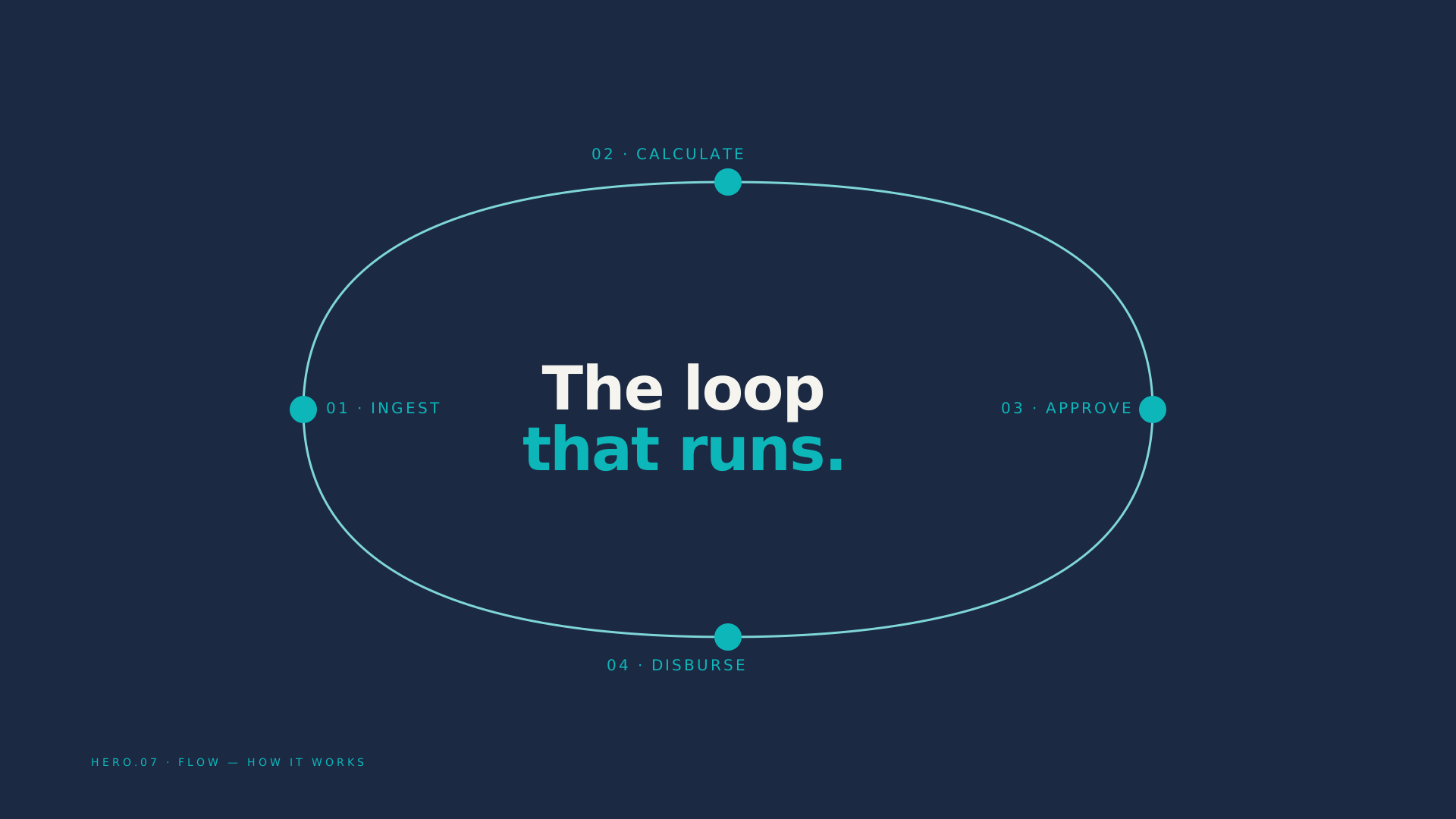
Hiring in Saudi Arabia requires Iqama (work permit) sponsorship by a licensed Saudi employer, GOSI social insurance registration and contributions, mandatory medical insurance (CCHI-compliant), and compliance with Saudi labour law including Saudization quotas. An EOR provides all of this. Typical onboarding takes 3–6 weeks depending on visa type and nationality.
Iqama sponsorship and work permits
Every foreign worker in Saudi Arabia needs an Iqama (residency/work permit) sponsored by a licensed employer. The process includes: visa issuance from the Saudi embassy in the worker's home country, entry into Saudi Arabia, medical examination, Iqama card issuance, and bank account opening.
New Iqama issuance typically takes 3–6 weeks from initiation. Transfers from an existing Saudi sponsor can be faster but involve administrative fees that scale with the number of previous transfers.
The EOR manages the complete Iqama lifecycle — initial issuance, annual renewals, exit/re-entry visas, and final cancellation on termination. Iqama renewals must be completed before expiry; late renewals result in penalties.
GOSI and employer contributions
GOSI (General Organisation for Social Insurance) is mandatory for all employees in Saudi Arabia. Employer contributions differ by nationality: for Saudi nationals, the employer contributes 12% (employee contributes 10%). For expat employees, the employer contributes 2% for occupational hazard insurance only.
GOSI registration must be completed within the first month of employment. Late registration or incorrect contributions trigger penalties. The EOR handles GOSI registration, monthly contribution calculations, and filings.
Additionally, employers must provide CCHI-compliant medical insurance for all employees. Insurance class and coverage level affect cost — Global Kinect's Saudi calculator includes medical tier selection so you can see the impact on total cost.
Saudization and Nitaqat
Saudi Arabia's Nitaqat programme requires private sector companies to maintain a minimum percentage of Saudi national employees. The percentage varies by sector and company size, and the EOR's Nitaqat band affects its ability to issue new visas.
As an EOR client, your workers count toward the EOR's quota — not yours. Reputable EOR providers maintain healthy Nitaqat bands, but it's worth confirming this before engaging. A provider in the 'red' band may face restrictions on new visa issuance.
Saudization requirements are evolving, with new roles being localised regularly. The EOR monitors these changes and advises if any of your roles are affected.
Salary structure and end of service
Saudi salaries are typically structured as: basic salary (around 50–65% of total), housing allowance (25%), and transport allowance (10%). This structure affects end-of-service (EoS) calculations and GOSI contributions, which are based on basic salary plus housing.
End-of-service gratuity accrues based on length of service: half a month's salary per year for the first 5 years, and one full month per year thereafter. For contracts under 12 months, EoS may not apply unless the contract is extended.
Global Kinect's Saudi calculator models all of these components — including salary breakdown, GOSI, medical tiers, Saudization fees, and Iqama costs — so you can budget accurately before committing.