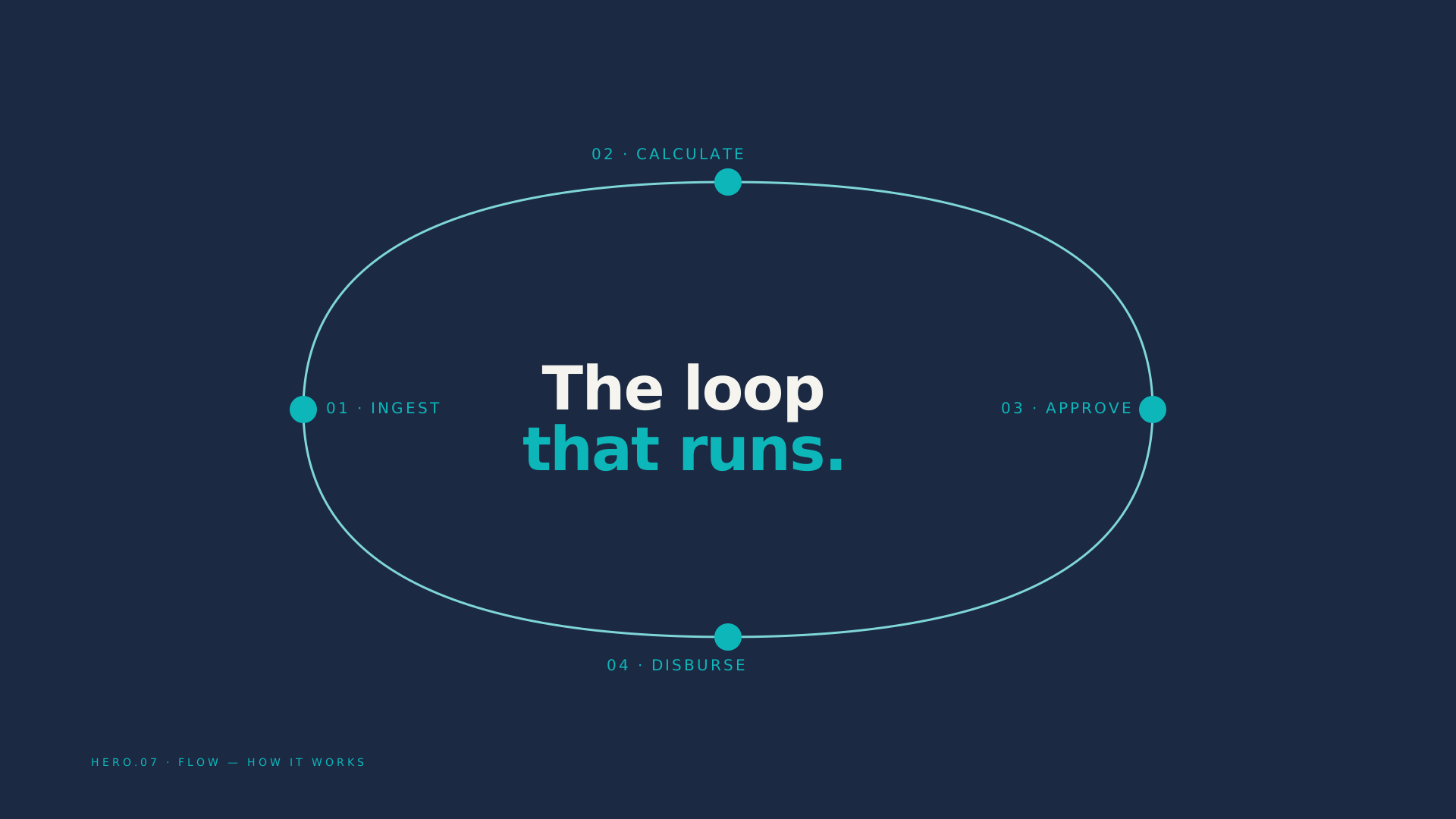
Saudi EOSB (End of Service Benefit) is a statutory final-payment provision accrued per cycle and settled at termination. For UK GAAP reporting, EOSB sits in the same conceptual category as UK statutory severance and service-related termination payments — accrued continuously as a liability on the balance sheet, settled when the employment ends. The per-cycle liability movement is the line your consolidation team tracks.
What EOSB is
EOSB is the Gulf-wide statutory final-payment obligation owed to an employee on termination. The exact formula varies by country — Saudi Arabia uses an early-tier / full-tier rule: the early-tier rate applies in the first years of service, the full-tier rate applies after a tenure threshold.
EOSB is owed regardless of termination cause in most circumstances (resignation, redundancy, contract end). Some configurations modify this — fixed-term contracts that complete naturally vs early termination by employer have different settlement implications.
How it maps to UK GAAP
The closest UK GAAP analogues are statutory severance, contractual termination payments, and post-employment benefit obligations. Like UK statutory severance, EOSB is a known statutory obligation rather than a discretionary payment. Like UK long-service awards, it accrues with tenure.
For balance sheet reporting, EOSB is a defined obligation — accrued as a liability per cycle, with the liability movement reported each period. Your specialist's per-cycle pack includes the EOSB liability delta so your consolidation team sees the movement, not just the end-state balance.
The key reporting discipline is to track liability movement (cycle-on-cycle change) rather than just final settlement. Many UK consolidation teams initially miss this and end up with a large unaccrued liability discovered at termination — which is exactly the bookkeeping pattern UK GAAP is designed to prevent.
What your consolidation team needs
Three things from your specialist per cycle. First, opening EOSB liability per employee. Second, accrual movement for the cycle (additional accrual based on tenure progression and any compensation changes). Third, closing EOSB liability per employee.
For employees who left during the cycle, the report shows the settled amount and the liability extinguishment. Your consolidation team folds this into the regional payroll cost line in line with your normal closing process.
Country variance to be aware of
Each MENA country has its own EOSB formula. Saudi Arabia's early-tier / full-tier rule. UAE's similar but distinct early-tier / full-tier rule with different day counts. Qatar's monthly-accrual rule (post-reform). Kuwait's indemnity formula. Oman's distinctively short early-tier threshold. Egypt's Labour Law 12/2003 formula.
For UK consolidation, the calculation differences don't matter — the engine handles them per country. What matters is that the per-cycle pack normalises the reporting structure across markets so your consolidation team sees one consistent EOSB liability line per regional cost centre.