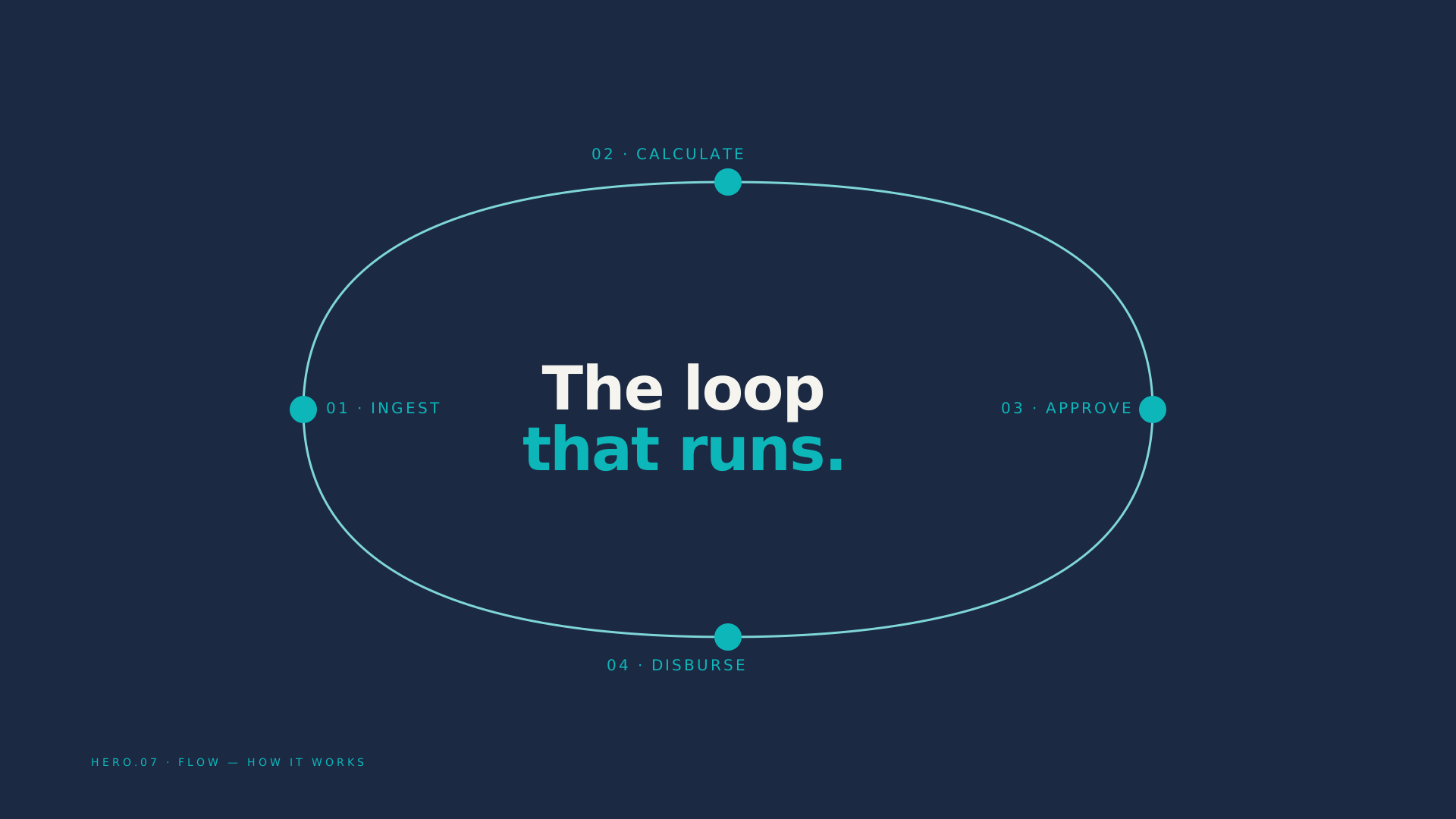
A MENA payroll provider switch typically takes two to three cycles to complete cleanly. The variance factors are data quality on the incumbent's side, your team's bandwidth to validate parallel cycles, and the cooperation of the outgoing provider on data handover. The most common pitfalls are EOSB liability handover (often under-documented by incumbents), GOSI / WPS / equivalent registration handovers, and cycle-cutover timing relative to your finance close.
What a switch actually involves
Three workstreams run in parallel. Data handover from the incumbent: master records, statutory registrations, EOSB liability balances, contract data. Parallel cycle validation: the new provider runs the cycle in parallel for one or two periods and the outputs are reconciled against the incumbent's. Cutover: a designated cycle becomes the first live run on the new provider, and the incumbent's involvement ends.
For a multi-country MENA operation, expect to run the workstreams country-by-country rather than all at once. Cutover timing per country is driven by statutory cycle dates and your finance close calendar.
The common pitfalls
EOSB liability handover. Incumbent providers vary widely in how cleanly they document EOSB accruals per employee. The new provider needs the opening liability per employee to start tracking accruals correctly. Missing or imprecise opening balances are the single biggest cause of post-cutover variance.
GOSI / WPS / equivalent registrations. The statutory registrations stay with your entity, not with the provider — but the provider's role in the file generation and submission flow needs to be cleanly handed over. Confirm registration access and credentials are with your team, not locked to the incumbent.
Cycle-cutover timing. The first cycle on the new provider should align to your finance close calendar so the regional close happens cleanly. Cutting over mid-quarter close adds avoidable complexity.
What to check before signing a new contract
Where production data sits. For Saudi clients, in-Kingdom hosting (Saudi PDPL alignment) is now table stakes — confirm the new provider hosts production data in the right jurisdiction. The contracting party — UK supplier under B2B place-of-supply rules is the default for UK and Irish CFOs; confirm this fits your procurement classification. Sterling invoicing availability for the management fee. UK GAAP-aligned cost-category mapping in the per-cycle reporting.
For multi-market operations: how the provider handles the country-by-country statutory differences, whether they run only MENA or treat MENA as part of a global platform, and whether their engine carries the regional regimes natively or via a regional partner network. Specialist providers differ from generic global vendors on each of these.
Switching to Global Kinect specifically
Two to three cycles is the typical handover window for a clean cutover from an incumbent to Global Kinect. The cutover plan is scoped in the first conversation — countries in scope, headcount per country, your current cycle dates, your incumbent's data-handover posture, and any specific reporting integration with your UK finance system.
Contracting party is Global Kinect Ltd, Companies House 16852789. Production data on Oracle Cloud — in Jeddah for Saudi clients (PDPL scope), regional MENA estate for the rest. Sterling invoicing on request. UK GAAP-aligned cost-category mapping in per-cycle reporting. The full ownership split between you and us is documented per delivery model (Bureau or Managed Payroll) before contract sign.