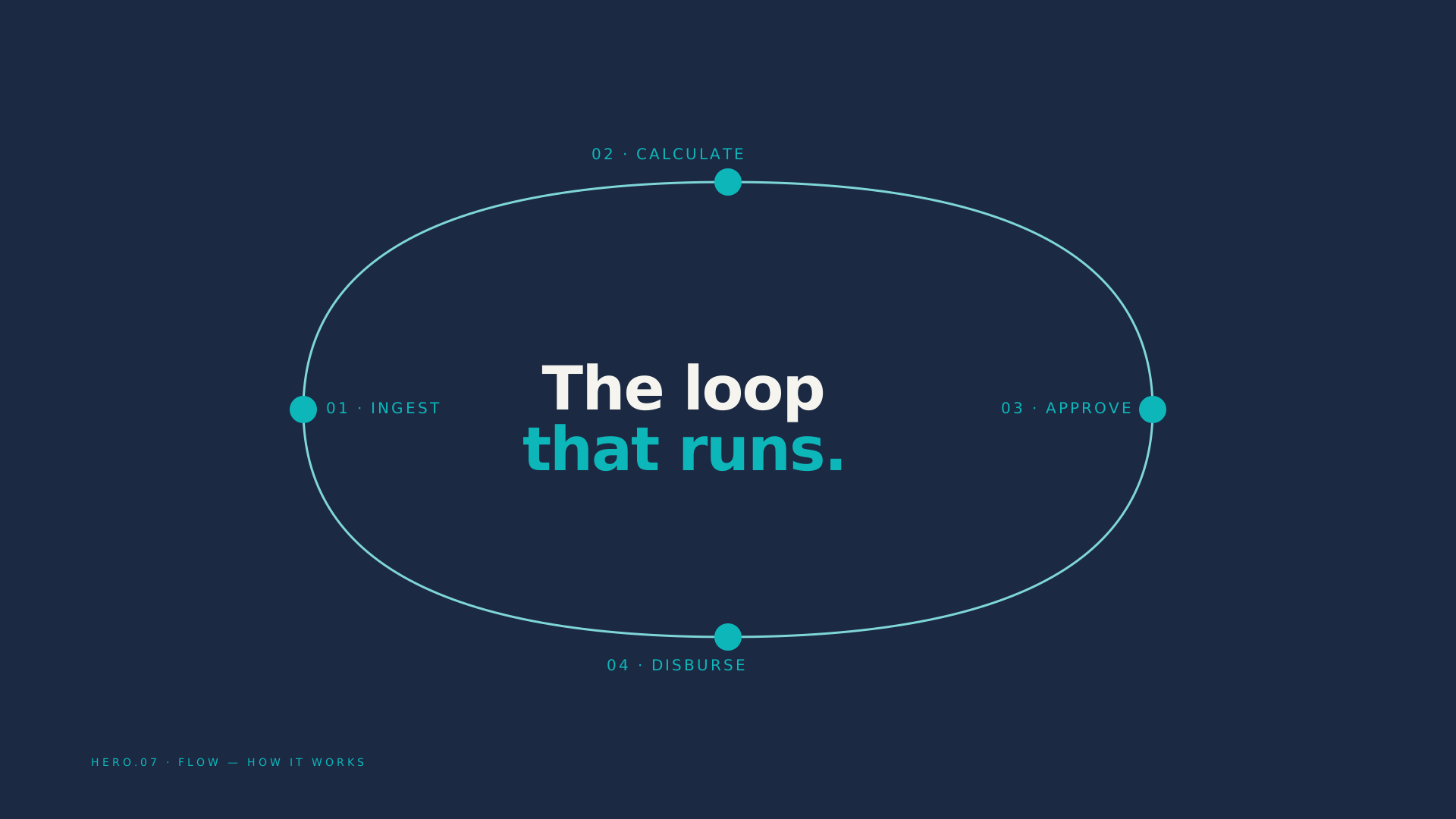
UK and Irish businesses fast-tracking MENA hiring typically use Employer of Record (EOR) for the first one to three hires per market — typical onboarding is 2 to 6 weeks depending on visa pathway. Once headcount in a market grows past about ten employees, opening a local entity (Build) usually amortises better. A UK-registered MENA payroll specialist sits between or alongside both, handling the operating layer once an entity is in place.
When fast-track matters
MENA expansion timing typically slips for one of two reasons: the entity setup process is longer than UK or Irish operators expect (3 to 9 months end-to-end depending on market), or the operator under-estimates the visa-and-payroll-setup pathway for a hire who's already been chosen.
Fast-tracking usually means EOR for the first hires. EOR removes the entity-setup dependency: the worker is employed through Global Kinect's regional entity, payroll runs from cycle one, and your team manages the work directly. The trade-off is per-employee cost — EOR amortises less well at higher headcount than your own entity.
Market-by-market timing
Saudi Arabia: 3–6 weeks via EOR; 6–9 months for entity setup including the RHQ programme where applicable. Iqama sponsorship and GOSI registration are the gating items.
UAE: 2–4 weeks via EOR; 2–4 months for entity setup (mainland or free zone). Emirates ID and labour card are the gating items.
Egypt, Morocco, Jordan, Lebanon: 3–6 weeks via EOR; entity setup typically 3–6 months but more variable. Work-permit pathway is the gating item for non-nationals.
What the UK or Irish CFO needs to confirm
Before starting any MENA hire, finance and HR should align on three things: the legal employment route (EOR, your entity, or a specialist running cycles through your entity); the contracting party for the supplier relationship (UK supplier under B2B place-of-supply rules is typical); and the currency of pass-through costs (local currency, with management fee invoicing in sterling on request).
Getting these three sorted before the offer letter prevents the most common cause of post-offer slippage: discovering mid-onboarding that a specific arrangement won't work for your accounts payable or audit posture.
Which guide to read next
If you're considering the entity-setup route, see the Saudi entity opening guide. If you're scaling beyond EOR and want to understand the operating-layer choices, see the build-versus-EOR-versus-specialist decision page at /expand-to-mena. If your finance team needs to align Saudi or Egyptian payroll with UK GAAP reporting, see the UK-GAAP / EOSB guide.